Benefits of hot stone massage: what's supported, what's uncertain, and what to ask
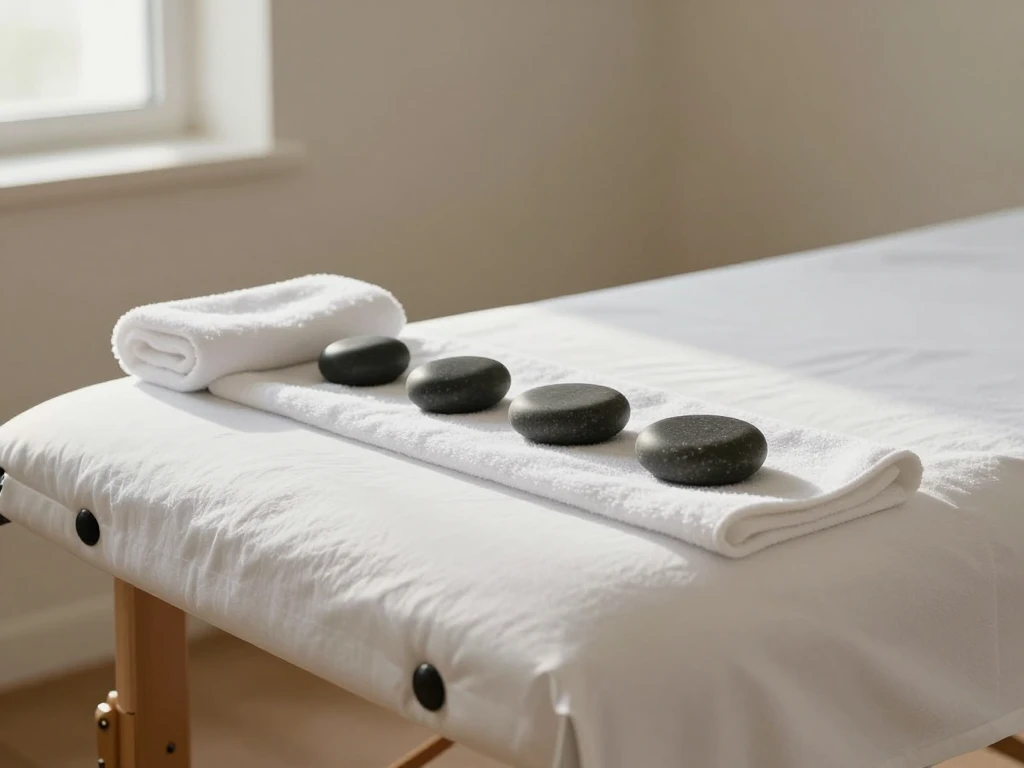
What to expect from a hot stone massage
Hot stone massage is one of many massage therapy styles, a practice that involves manipulating the body's soft tissues—including the muscles beneath the skin—to ease stress and tension, support relaxation and wellness, manage a health condition, or improve circulation. Therapists often combine several techniques in one appointment, and because technique and style choices vary widely, how a hot stone massage feels is hard to predict in advance. [1] [2]
A typical massage therapy appointment lasts about 50 minutes. Rooms are usually dimly lit, with gentle, soothing music in the background, and the atmosphere is designed to be relaxing even before the massage begins. [2]
Before the session starts, discuss which techniques will be used and what they should feel like, and mention anything that might affect your comfort. [2]
What the research says about the benefits and limits of hot stone massage
When people ask about the benefits of hot stone massage, much of the relevant research actually looks at massage therapy in general rather than at hot stones as a separate treatment. No study in these sources compared hot stone massage with the same massage done without stones, so a benefit found in that research cannot be assumed to come from the heat or the stones themselves. [1] [2]
Among the benefits of hot stone massage, relaxation is the most consistently reported: the gentle, soothing, calming effect of a hot stone massage is thought to nudge the body's nervous system toward the rest-and-digest state, which helps explain lower stress and muscle tension after a session. Research also reports lower levels of cortisol (a stress hormone), increased serotonin and dopamine, and better sleep for some people with insomnia related to menopause or heart failure. [3] [2]
The pain-related benefits of hot stone massage are more modest than the promotional picture often suggests, and much of the supporting evidence comes from massage studies rather than hot stone massage specifically. For chronic low-back pain, reviews found low-strength evidence of short-term improvement, and researchers said they had very little confidence in massage as an effective treatment. Neck and shoulder pain may improve briefly, but massage was not shown to outperform other active therapies. In small knee osteoarthritis studies, five of six found short-term relief. [1]
Other symptoms and conditions show mixed results. For fibromyalgia, massage continued for at least five weeks improved pain, anxiety, and depression in a review of nine studies, without a clear effect on sleep. Headache studies have been inconsistent, and although massage can be part of supportive care for people with cancer, with appropriate precautions, the evidence that it can relieve pain and anxiety is not strong. [1]
The evidence also limits the benefits of hot stone massage. Nothing in these sources identifies stone- or heat-specific benefits — for example, removing toxins or producing effects that other massage styles cannot. The benefits that do appear are often short-term rather than long-term; some studies found that longer appointments several times a week gave better results than shorter or less frequent ones. Massage may also help reduce muscle tension. It relaxes tight muscles and supports blood circulation and lymphatic drainage; one study suggests it may boost immunity. [3]
Before you book a hot stone massage: conditions to disclose and questions to ask
Despite the potential benefits of hot stone massage, rare serious side effects have been reported, including blood clots, nerve injury, and bone fracture, although the therapy appears to be low-risk overall. Several of those cases involved vigorous massage or people at higher risk of harm, such as older adults. A careful conversation beforehand is therefore part of using massage wisely. [1]
Talk with a health care provider if you are unsure whether hot stone massage is appropriate for you, and do not postpone medical care for a problem that needs attention. Cleveland Clinic advises mentioning in advance if you take blood thinners, have blood clots in your legs, have tumours, have osteoporosis or a spine disorder, have a high-risk pregnancy, use an implanted or attached medical device, or had an acute injury or surgery in the past 48 hours. [2] [1]
The U.S. National Center for Complementary and Integrative Health (NCCIH) also recommends asking about a therapist's training, experience and credentials, as well as how many treatments might be needed, the cost and insurance coverage. That guidance reflects U.S. regulation: in its May 2019 overview, NCCIH reported that 45 states and the District of Columbia required massage therapists to be licensed or certified. In Canada, confirm which credentials apply where you live before you book. [1]
Before your hot stone massage, you can also ask heat-specific questions: how the heated stones are prepared, how the therapist checks whether they are too hot, and what happens if you want them cooler or removed. Asking them before any heated stone is placed on your skin helps you understand the approach and the sensations to expect. [2]

During your hot stone massage: communicating comfort, pressure and heat
Throughout the appointment, it is fine to talk about what you feel. If pressure is too deep, a stroke is uncomfortable, or a sensation is not what you expected, let the therapist know. Some people describe intense pressure as painful in a good way, but genuine pain or discomfort should always be reported right away. [2]
The heat of the stones deserves the same directness. If the stones feel too hot or too heavy, say so immediately and ask how the session can be adjusted. Comfort can always be the priority, and checking in about what you feel is a natural part of the treatment. [2]